
Infrared optical systems require materials that perform reliably at wavelengths beyond the visible range. Unlike visible optics, where materials such as BK7 or fused silica are commonly used, infrared optics often require specialized crystals or semiconductor materials.
The best material is not determined by a single property. Transmission, refractive index, thermal behavior, mechanical durability, coating compatibility, and cost must all be reviewed together. This article explains how to select infrared optical materials from a practical engineering point of view.
1. Start with the Operating Wavelength
The first question is simple:
What wavelength does the system need to transmit?
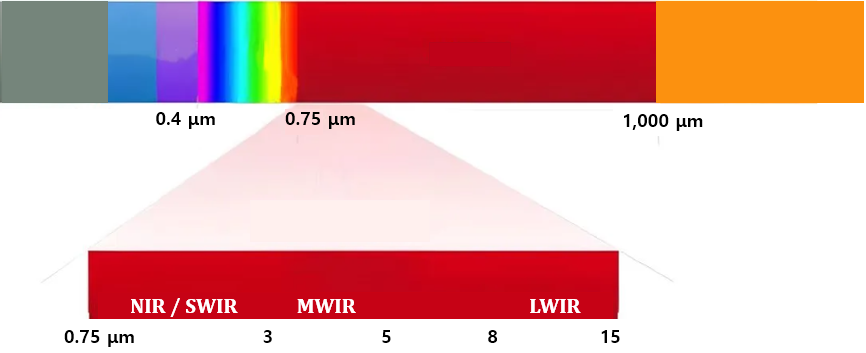
Infrared systems are commonly grouped by wavelength range.
| Region | Approximate Range | Typical Use |
|---|---|---|
| NIR | 0.75–3 µm | Sensors, telecom, laser alignment, near-IR imaging |
| MWIR | 3–5 µm or broader mid-IR range | Gas detection, thermal imaging, IR spectroscopy |
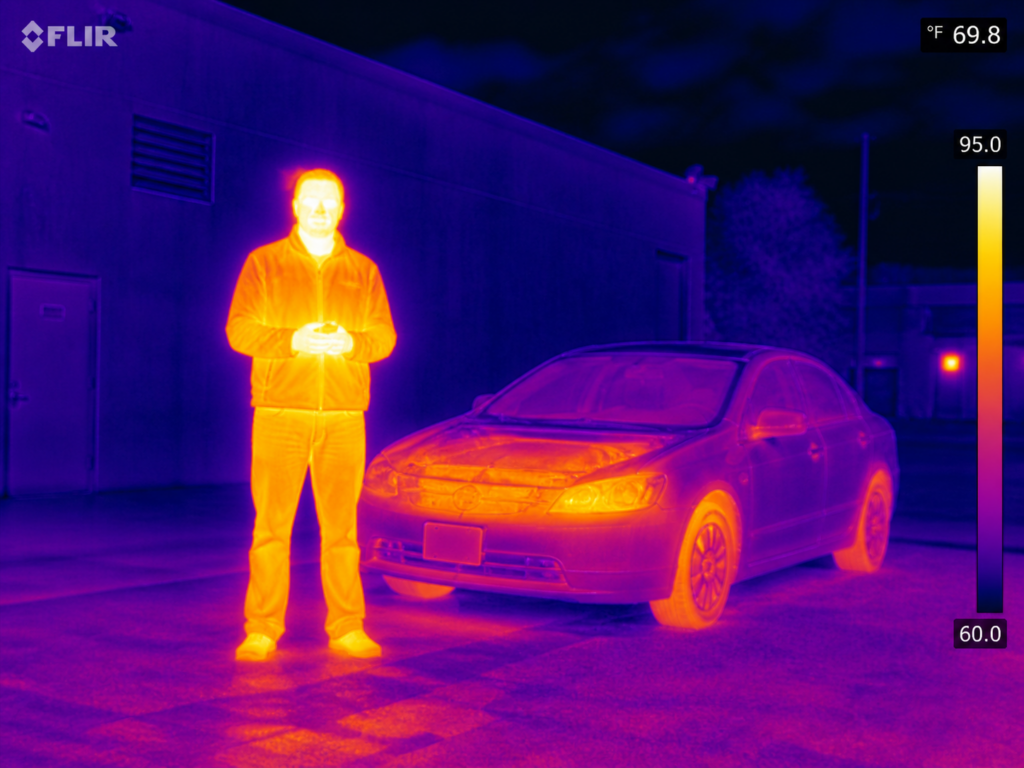
| LWIR | 8–12 µm | Thermal cameras, defense optics, night vision |
| Far IR | Above LWIR | Scientific and specialized detection systems |
A material that works well at 1.55 µm may not work at 10.6 µm. Likewise, a material suitable for a thermal camera may not be the best choice for a high-power CO₂ laser. Therefore, material selection should always begin with the required wavelength range, not with material name.
2. Transmission Is the First Screening Criterion
Transmission tells how much light passes through the optical material. For infrared optics, this is usually the first property to check.
For example:
| Application | Important Wavelength | Material Consideration |
|---|---|---|
| Telecom / NIR optics | 1.31 µm, 1.55 µm | Fused silica, N-BK7, sapphire, CaF₂ |
| CO₂ laser optics | 10.6 µm | ZnSe is commonly considered |
| Thermal imaging | 3–5 µm or 8–12 µm | Ge, ZnSe, ZnS, Si, chalcogenide materials |
| FTIR spectroscopy | Broad IR range | CaF₂, KBr, NaCl, ZnSe, other IR crystals |
The important point is that “transparent” is not a universal property. A material is transparent only within certain wavelength ranges. For this reason, engineers should always check a transmission curve before selecting a material.
3. Refractive Index Affects Optical Design
The refractive index determines how strongly a material bends light. Higher-index materials can provide stronger optical power, which may help reduce the number of lens elements. However, high refractive index also increases surface reflection. This means anti-reflection coating becomes more important.
| Material Type | General Design Impact |
|---|---|
| Low-index materials | Lower reflection, often useful for windows |
| Medium-index materials | Balanced design flexibility |
| High-index materials | Strong lens power, but higher reflection loss |
For example, germanium and silicon have relatively high refractive indices compared with many visible optical glasses. This can be useful in compact IR lens systems, but coating design and thermal effects must be carefully reviewed.
| Material | Refractive Index (nd) | Abbe Number (vd) | Density (g/cm³) | CTE (×10⁻⁶/°C) | dn/dT (×10⁻⁶/°C) | Knoop Hardness (kgf/mm²) |
|---|---|---|---|---|---|---|
| Calcium Fluoride (CaF₂) | 1.434 | 95.1 | 3.18 | 18.85 | -10.6 | 158.3 |
| Fused Silica (FS) | 1.458 | 67.80 | 2.2 | 0.55 | 11.9 | 500 |
| Germanium (Ge) | 4.003 | N/A | 5.33 | 6.1 | 396 | 780 |
| Magnesium Fluoride (MgF₂) | 1.413 | 106.2 | 3.18 | 13.7 | 1.7 | 415 |
| N-BK7 | 1.517 | 64.2 | 2.46 | 7.1 | 2.4 | 610 |
| Potassium Bromide (KBr) | 1.527 | 33.6 | 2.75 | 43 | -40.8 | 7 |
| Sapphire | 1.768 | 72.2 | 3.97 | 5.3 | 13.1 | 2200 |
| Silicon (Si) | 3.422 | N/A | 2.33 | 2.55 | 160 | 1150 |
| Sodium Chloride (NaCl) | 1.491 | 42.9 | 2.17 | 44 | -40.8 | 18.2 |
| Zinc Selenide (ZnSe) | 2.403 | N/A | 5.27 | 7.1 | 61 | 120 |
| Zinc Sulfide (ZnS) | 2.631 | N/A | 5.27 | 7.6 | 38.7 | 120 |
4. Thermal Stability Is Critical in IR Systems
Many infrared systems operate in environments where temperature changes are significant. Examples include outdoor thermal cameras, laser processing systems, defense sensors, and industrial monitoring equipment.
Two thermal properties are especially important.
| Property | Meaning | Why It Matters |
|---|---|---|
| CTE | Coefficient of thermal expansion | Determines dimensional change with temperature |
| dn/dT | Change of refractive index with temperature | Can shift focus or change optical performance |
If a lens material has a high dn/dT, the focal point may move as temperature changes. This is especially important for precision imaging systems and outdoor IR optics. Germanium is a useful IR material, but its thermal behavior must be considered carefully in systems exposed to temperature variation.
| Material | Key Properties | Typical Applications |
|---|---|---|
| Calcium Fluoride (CaF₂) | Low absorption, excellent refractive-index uniformity, broad transmission range | Spectroscopy, semiconductor processing, cooled thermal imaging |
| Fused Silica (FS) | Low coefficient of thermal expansion in the IR range, good transmission in selected IR regions, high optical stability | Interferometry, laser measurement, spectroscopy |
| Germanium (Ge) | High refractive index, high hardness, excellent transmission in the MWIR–FIR range | Thermal imaging, rugged infrared imaging systems |
| Magnesium Fluoride (MgF₂) | Low refractive index, good transmission from VIS to MWIR, relatively high thermal expansion | Windows, lenses, polarizers, applications where AR coating may be minimized |
| N-BK7 | Cost-effective optical glass suitable for visible and near-infrared applications | Machine vision, microscopy, general industrial optics |
| Potassium Bromide (KBr) | Broad infrared transmission range, water-soluble, sensitive to moisture, relatively soft | FTIR spectroscopy |
| Sapphire | Excellent hardness, high durability, good IR transmission, strong environmental resistance | IR laser systems, spectroscopy, harsh-environment optical windows |
| Silicon (Si) | Lightweight, cost-effective, useful transmission in selected MWIR ranges | Spectroscopy, MWIR laser systems, THz imaging |
| Sodium Chloride (NaCl) | Broad transmission from UV to IR, low cost, water-soluble, vulnerable to thermal shock | FTIR spectroscopy |
| Zinc Selenide (ZnSe) | Low absorption, good resistance to thermal shock, suitable for long-wave IR and laser use | CO₂ laser systems, thermal imaging |
| Zinc Sulfide (ZnS) | Good transmission in VIS and IR regions, harder and more chemically resistant than ZnSe | Thermal imaging, rugged IR windows |
5. Mechanical Strength and Handling Should Not Be Ignored
Optical performance alone is not enough. The selected material must also survive manufacturing, coating, assembly, cleaning, and actual operating conditions.
| Material Concern | Practical Meaning |
|---|---|
| Hardness | Resistance to scratching and wear |
| Brittleness | Risk during machining or assembly |
| Moisture sensitivity | Important for materials such as KBr or NaCl |
| Thermal shock resistance | Important for high-power laser use |
| Chemical resistance | Important in harsh environments |
For example, sapphire is extremely hard and durable, making it attractive for protective windows. On the other hand, water-soluble materials such as KBr and NaCl can be useful for spectroscopy but require careful handling and storage.
6. Common Infrared Materials and Practical Use Cases
The table below summarizes commonly used infrared materials from a practical selection perspective.
| Material | Practical Strength | Typical Use |
|---|---|---|
| CaF₂ | Broad transmission, low absorption | UV–IR windows, spectroscopy, laser optics |
| MgF₂ | Good transmission from UV/VIS to IR, low index | Windows, lenses, polarizers |
| Fused Silica | Good stability, low thermal expansion | NIR systems, laser optics, precision measurement |
| Sapphire | Very high hardness and durability | Protective windows, harsh environments |
| Silicon | Lightweight, cost-effective for selected IR ranges | MWIR optics, IR sensors, THz systems |
| Germanium | High index, useful for thermal imaging | LWIR lenses, thermal cameras |
| ZnSe | Low absorption at CO₂ laser wavelength | CO₂ laser lenses and windows |
| ZnS | Durable IR material with good transmission | IR windows, thermal imaging |
| KBr | Broad IR transmission but moisture sensitive | FTIR spectroscopy |
| NaCl | Broad transmission, low cost, moisture sensitive | FTIR spectroscopy |
This table should be used only as a starting point. Final selection should be based on the actual wavelength, thickness, coating, environment, and optical design requirements.
7. Application-Based Material Selection
7.1. CO₂ Laser Systems
For CO₂ laser systems operating at 10.6 µm, low absorption is essential. Even small absorption can create heat, thermal lensing, or damage at high power.
Common material choice:
| Component | Common Material |
|---|---|
| Lens | ZnSe |
| Window | ZnSe |
| Protective optic | ZnSe or other suitable IR material depending on power and environment |
Key review points:
| Checkpoint |
|---|
| Absorption at 10.6 µm |
| AR coating durability |
| Laser damage threshold |
| Thermal shock resistance |
| Surface quality |
7.2. Thermal Imaging Systems
Thermal imaging systems often operate in the MWIR or LWIR range. The material must transmit the required thermal radiation and remain stable under environmental changes.
Common material choices:
| Wavelength Band | Candidate Materials |
|---|---|
| MWIR | Si, Ge, ZnSe, ZnS |
| LWIR | Ge, ZnSe, ZnS |
Key review points:
| Checkpoint |
|---|
| Transmission in target band |
| Temperature-dependent focus shift |
| AR coating performance |
| Environmental durability |
| Lens weight and cost |
7.3. FTIR and Spectroscopy
Spectroscopy often requires broad wavelength transmission. However, some materials that transmit broadly are mechanically weak or moisture sensitive.
Common material choices:
| Material | Note |
|---|---|
| CaF₂ | Stable and widely used |
| KBr | Broad IR transmission, moisture sensitive |
| NaCl | Broad transmission, low cost, moisture sensitive |
| ZnSe | Useful for many IR spectroscopy applications |
Key review points:
| Checkpoint |
|---|
| Required spectral range |
| Moisture sensitivity |
| Cleaning method |
| Sample environment |
| Thickness and absorption |
7.4. Harsh-Environment Windows
For protective windows, mechanical strength may be more important than maximum optical performance.
Common material choices:
| Requirement | Candidate Material |
|---|---|
| High hardness | Sapphire |
| IR transmission with durability | ZnS |
| Protective IR window | Sapphire, ZnS, selected coated IR materials |
Key review points:
| Checkpoint |
|---|
| Scratch resistance |
| Impact resistance |
| Chemical exposure |
| Temperature range |
| Coating durability |
8. Practical Selection Workflow
A simple workflow can prevent many material selection mistakes.
| Step | Question |
|---|---|
| 1 | What is the operating wavelength or wavelength band? |
| 2 | Is the component a window, lens, prism, mirror substrate, or protective cover? |
| 3 | What minimum transmission is required? |
| 4 | Is the system narrowband or broadband? |
| 5 | Is temperature variation significant? |
| 6 | Is the environment clean, industrial, outdoor, vacuum, or high-power laser? |
| 7 | Is mechanical durability important? |
| 8 | Is AR coating required? |
| 9 | What are the cost and delivery constraints? |
| 10 | Can the material be manufactured to the required size, tolerance, and surface quality? |
This workflow is often more useful than choosing a material only from a general property table.
9. Example Selection Scenarios
9.1. 10.6 µm CO₂ Laser Lens
Main requirement:
| Requirement | Priority |
|---|---|
| Low absorption at 10.6 µm | Very high |
| Good AR coating | Very high |
| Thermal stability | High |
| Mechanical hardness | Medium |
Possible choice: ZnSe is commonly used for CO₂ laser lenses because of its low absorption at the CO₂ laser wavelength.
9.2. Protective Window for a Harsh Environment
Main requirement:
| Requirement | Priority |
|---|---|
| Scratch resistance | Very high |
| Impact resistance | High |
| IR transmission | Medium to high |
| Cost | Medium |
Possible choice: Sapphire may be suitable when durability is the main requirement. ZnS may also be considered when IR transmission and ruggedness are both needed.
9.3 Thermal Imaging Lens
Main requirement:
| Requirement | Priority |
|---|---|
| LWIR or MWIR transmission | Very high |
| Optical design flexibility | High |
| Thermal focus stability | High |
| Coating performance | High |
Possible choice: Germanium, ZnSe, ZnS, or silicon may be considered depending on the wavelength band and system design.
10. Conclusion
Selecting an infrared optical material is a balance between optical, thermal, mechanical, and economic factors.
The best material depends on:
| Factor |
|---|
| Operating wavelength |
| Required transmission |
| Refractive index |
| Thermal stability |
| Mechanical durability |
| Coating requirements |
| Cost and availability |
| Manufacturing feasibility |
For CO₂ laser optics, ZnSe is often considered. For thermal imaging, Ge, ZnSe, ZnS, and Si are common candidates. For harsh environments, sapphire and ZnS may be useful. For spectroscopy, CaF₂, KBr, NaCl, and ZnSe are often reviewed. In practical optical engineering, there is no single best infrared material. There is only the most appropriate material for a specific wavelength, environment, and system requirement.